Hiperviskoziteye Bağlı Hipoksi ve Vazodilatör Direnci
Yazar: Can Ünal | Evidence-Based Performance Architect
ÖZET (Abstract)
Bu vaka çalışması, yüksek anabolik destek (Only Testosteron Enanthate) ve yüksek karbonhidrat yüklemesi altındaki ileri seviye bir ektomorf sporcuda görülen paradoksal performans düşüşünü incelemektedir. Sporcuda kreatin kinaz (CK) seviyeleri düşük (hücresel bütünlük tam) ve glikojen depoları dolu olmasına rağmen, antrenmanın henüz başında (Set 1, Rep 3-5) akut iskemik ağrı (erken yanma) ve 15. dakikada gelişen nefes darlığı (dyspnea) gözlemlenmiştir. Uygulanan agresif sempatomimetik protokolün başarısızlığı, sorunun kimyasal değil, hemodinamik olduğunu kanıtlamıştır.
1. VAKA VE BAŞARISIZ OLAN PROTOKOL
Sporcu, kas içi kan akışını (perfüzyonu) artırmak amacıyla Beta-2 Agonist (Ventolin/Salbutamol Sprey) ve Sempatomimetik/Ekspektoran (Broksin Şurup) kombinasyonu ile Nitrik Oksit Prekürsörlerini (Arginine/Citrulline) birlikte kullanmıştır. Beklenti: Maksimum bronkodilatasyon ve vazodilatasyon ile performans artışı. Gözlem: Bench Press’te ilk 2 set ATP/CP depolarıyla yüksek güç üretilmiş, ancak 15. dakikada sistemik bir çöküş ve “hava açlığı” başlamıştır.
2. MEKANİZMA I: ADRENAL TÜKENİŞ VE NÖROTRANSMİTER KAOSU
Protokolün başarısızlığının ve nefes darlığının temel sebebi, Ventolin (Beta-2) ve Broksin’in (Efedrin/Guaifenesin) yarattığı sinerjik fırtınadır. Bu ikili sadece akciğerleri açmaz; Adrenal Bezlere (Böbrek Üstü) doğrudan ve şiddetli bir sinyal gönderir.
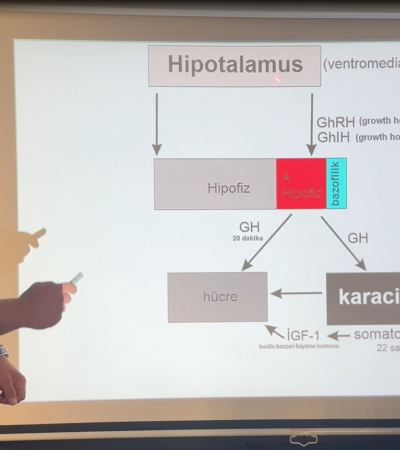
Bu sinyal, sistemik Epinefrin (Adrenalin) deşarjını tetikler. Epinefrin, beyne ilkel ve güçlü bir “Savaş ya da Kaç” (Fight or Flight) komutu verir. Vücut, bir hayatta kalma savaşına girdiğini sanarak metabolik hızını ve oksijen talebini dramatik şekilde artırır. Ancak kritik nokta şudur: Vücutta biriken bu aşırı katekolamin yükü metabolize edilirken yolaklar sapar; fazlası Dopamin ve nihayetinde Melatonin sentez döngülerine girer.
Sonuç: Sporcu antrenmanda “canlı” kalmaya çalışırken, beyin kimyası hem aşırı uyarılma (Dopamin) hem de sedasyon/kapanma (Melatonin) arasında kaotik bir biyokimyasal çatışma yaşar. Bu süreç, oksijen tüketimini (VO2 Max talebini) %200 artırır.
3. MEKANİZMA II: HİDROLİK ÇIKMAZI VE V/Q UYUMSUZLUĞU
Sporcunun yüksek Hematokrit (HCT) seviyesi, kanın viskozitesini (akışkanlık direncini) artırmıştır. İlaçların yarattığı “hiper-metabolik” oksijen talebi ile damardaki “koyu kan” karşılaşınca sistem çöker:
-
15. Dakika Paradoksu: İlk setlerde anaerobik (oksijensiz) yakıt kullanılırken sorun yoktur. Ancak 15. dakikada vücut aerobik sisteme geçmeye çalıştığında, Broksin ve Ventolin ile açılan akciğerler (Yüksek Ventilasyon) ile koyu kanın taşıyamadığı oksijen (Düşük Perfüzyon) çakışır. Buna tıpta V/Q Uyumsuzluğu denir.
-
Arginine Neden Çalışmadı? Poiseuille yasasına göre akış hızı, sıvının viskozitesi ile ters orantılıdır. Arginine damar çapını genişletse bile, içinden geçen sıvı (kan) “bal kıvamında” olduğu için mikrosirkülasyon (kılcal damar akışı) durma noktasına gelmiş, kas yine oksijensiz kalmıştır.
SONUÇ VE ÇÖZÜM
Bu vaka, “Hiperviskozite Sendromu” varlığında, metabolizmayı hızlandıran ve adrenal bezleri kamçılayan uyarıcıların (Ventolin + Broksin) sorunu çözmek bir yana, oksijen borcunu derinleştirerek tabloyu ağırlaştırdığını göstermiştir.
Sorun damar çapı değil, akışkanın fiziğidir. Çözüm, kimyasal ajanları artırmak değil; Flebotomi (kan verme) ve Agresif Hidrasyon ile kanın viskozitesini düşürerek “hidrolik akışı” sağlamaktır.
CASE STUDY: The Pump Paradox
Hyperviscosity-Induced Hypoxia and Vasodilator Resistance
Author: Can Ünal | Evidence-Based Performance Architect
ABSTRACT
This case study examines the paradoxical performance decline observed in an advanced ectomorph athlete under high anabolic support (Only Testosterone Enanthate) and high carbohydrate loading. Despite low Creatine Kinase (CK) levels (indicating intact cellular integrity) and full glycogen stores, acute ischemic pain (early burn) was observed at the very beginning of the workout (Set 1, Rep 3-5), followed by the development of shortness of breath (dyspnea) at the 15th minute. The failure of an aggressive sympathomimetic protocol proved that the issue was hemodynamic, not chemical.
1. THE CASE AND THE FAILED PROTOCOL
To increase intramuscular blood flow (perfusion), the athlete utilized a combination of a Beta-2 Agonist (Ventolin/Salbutamol Inhaler) and a Sympathomimetic/Expectorant (Broxin Syrup) along with Nitric Oxide Precursors (Arginine/Citrulline). Expectation: Maximum bronchodilation and vasodilation resulting in increased performance. Observation: While high power output was produced in the first 2 sets via ATP/CP stores, a systemic collapse and “air hunger” began at the 15th minute.
2. MECHANISM I: ADRENAL BURNOUT AND NEUROTRANSMITTER CHAOS
The fundamental cause of the protocol failure and dyspnea is the synergistic storm created by Ventolin (Beta-2) and Broxin (Ephedrine/Guaifenesin). This duo does not merely open the lungs; it sends a direct and violent signal to the Adrenal Glands.
This signal triggers a systemic Epinephrine (Adrenaline) discharge. Epinephrine issues a primal and powerful “Fight or Flight” command to the brain. The body, perceiving a survival battle, dramatically increases its metabolic rate and oxygen demand. However, the critical point is this: As the body metabolizes this excessive catecholamine load, pathways deviate; the excess enters the Dopamine and ultimately Melatonin synthesis cycles.
Result: While the athlete tries to stay “alive” during the workout, brain chemistry experiences a chaotic biochemical conflict between extreme stimulation (Dopamine) and sedation/shutdown (Melatonin). This process increases oxygen consumption (VO2 Max demand) by 200%.
3. MECHANISM II: THE HYDRAULIC DEADLOCK AND V/Q MISMATCH
The athlete’s high Hematocrit (HCT) level increased blood viscosity (fluid resistance). The system collapsed when the “hyper-metabolic” oxygen demand created by the drugs met the “thick blood” in the vessels:
-
The 15th Minute Paradox: There is no issue during the initial sets while using anaerobic (oxygen-free) fuel. However, when the body attempts to switch to the aerobic system at the 15th minute, the lungs opened by Broxin and Ventolin (High Ventilation) clash with the oxygen that the thick blood cannot transport (Low Perfusion). In medicine, this is called a V/Q Mismatch.
-
Why Didn’t Arginine Work? According to Poiseuille’s Law, flow rate is inversely proportional to the viscosity of the fluid. Even if Arginine dilated the vessel diameter, since the fluid (blood) passing through was of a “honey-like consistency,” microcirculation (capillary flow) came to a standstill, leaving the muscle hypoxic again.
CONCLUSION AND SOLUTION
This case demonstrated that in the presence of “Hyperviscosity Syndrome,” stimulants that accelerate metabolism and whip the adrenal glands (Ventolin + Broxin) do not solve the problem; on the contrary, they exacerbate the clinical picture by deepening the oxygen debt.
The problem is not the vessel diameter, but the physics of the fluid. The solution is not to increase chemical agents, but to ensure “hydraulic flow” by reducing blood viscosity through Phlebotomy (blood letting) and Aggressive Hydration.